


Where in the world are people using crypto, and how? To start, let’s take a look at Argentina, where 1 in 5 people use crypto, one of the highest rates in Latin America.
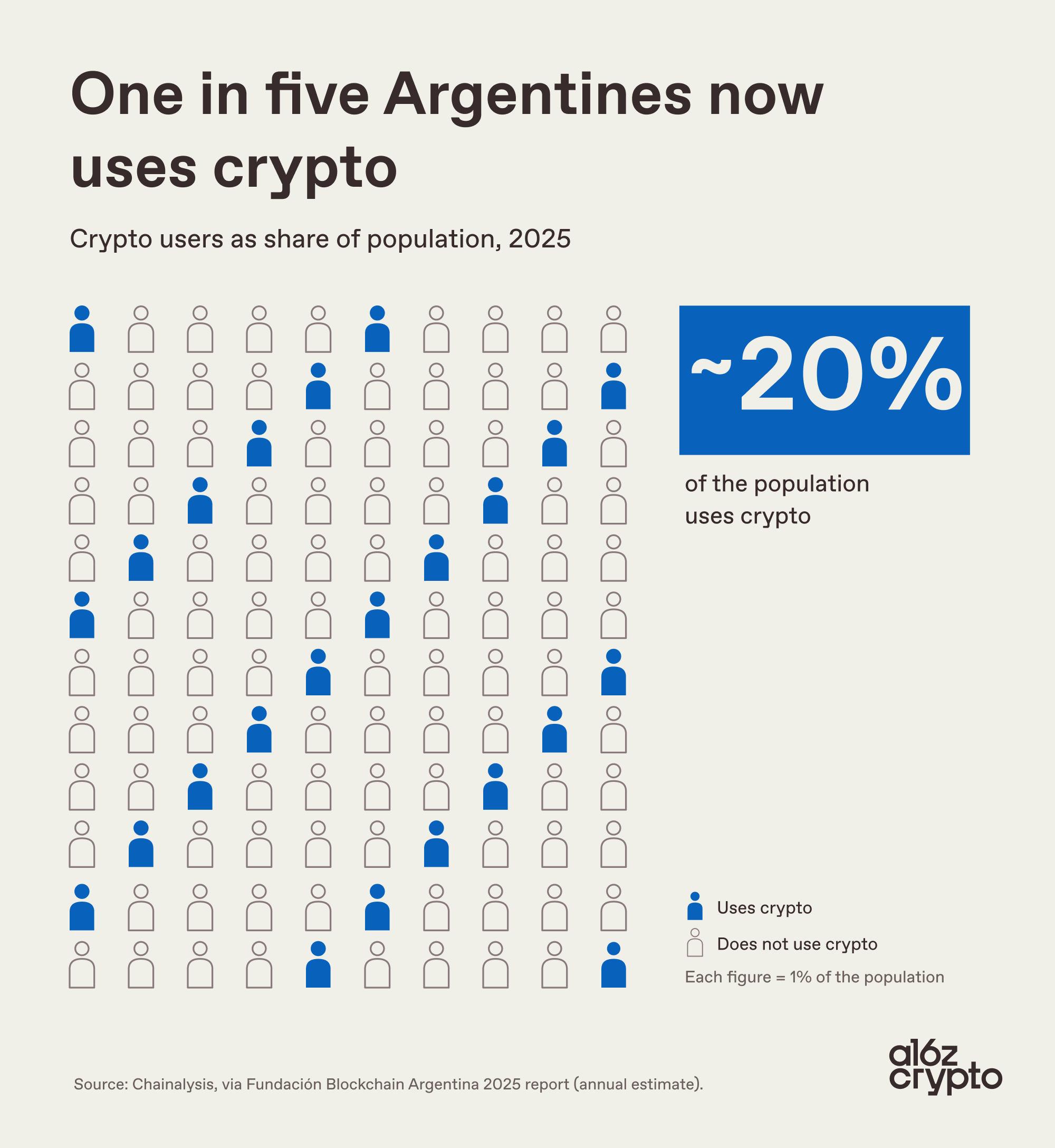
It happened fast. Downloads of Argentina’s 15 leading crypto apps nearly doubled in 2024, rising 93% from the previous year.
Argentina’s preference for dollars predates crypto. Back in 2001–2002, the government froze bank deposits and forcibly converted dollar-denominated deposits and loans into pesos via Decree 214/2002. After the dollar peg ended, the exchange rate fell from one peso per dollar to nearly four, wiping out roughly three-quarters of the peso’s dollar value. The crisis deepened distrust of the peso and reinforced the habit of keeping savings in physical dollars outside the banking system — think bills under mattresses or in safe-deposit boxes.
Stablecoins started to pick up steam in Argentina after the government reintroduced currency controls in 2019. Within months, the government had limited Argentines to $200 in official dollar purchases each month, while additional eligibility rules excluded many people entirely. Dollar-pegged stablecoins became another way to save in dollars without relying on the official market.
More recently, stablecoins have become a larger part of contractor pay. Year-over-year inflation reached 289% in April 2024, and the share of Argentina-based contractors receiving pay in USDC rose over the same period.
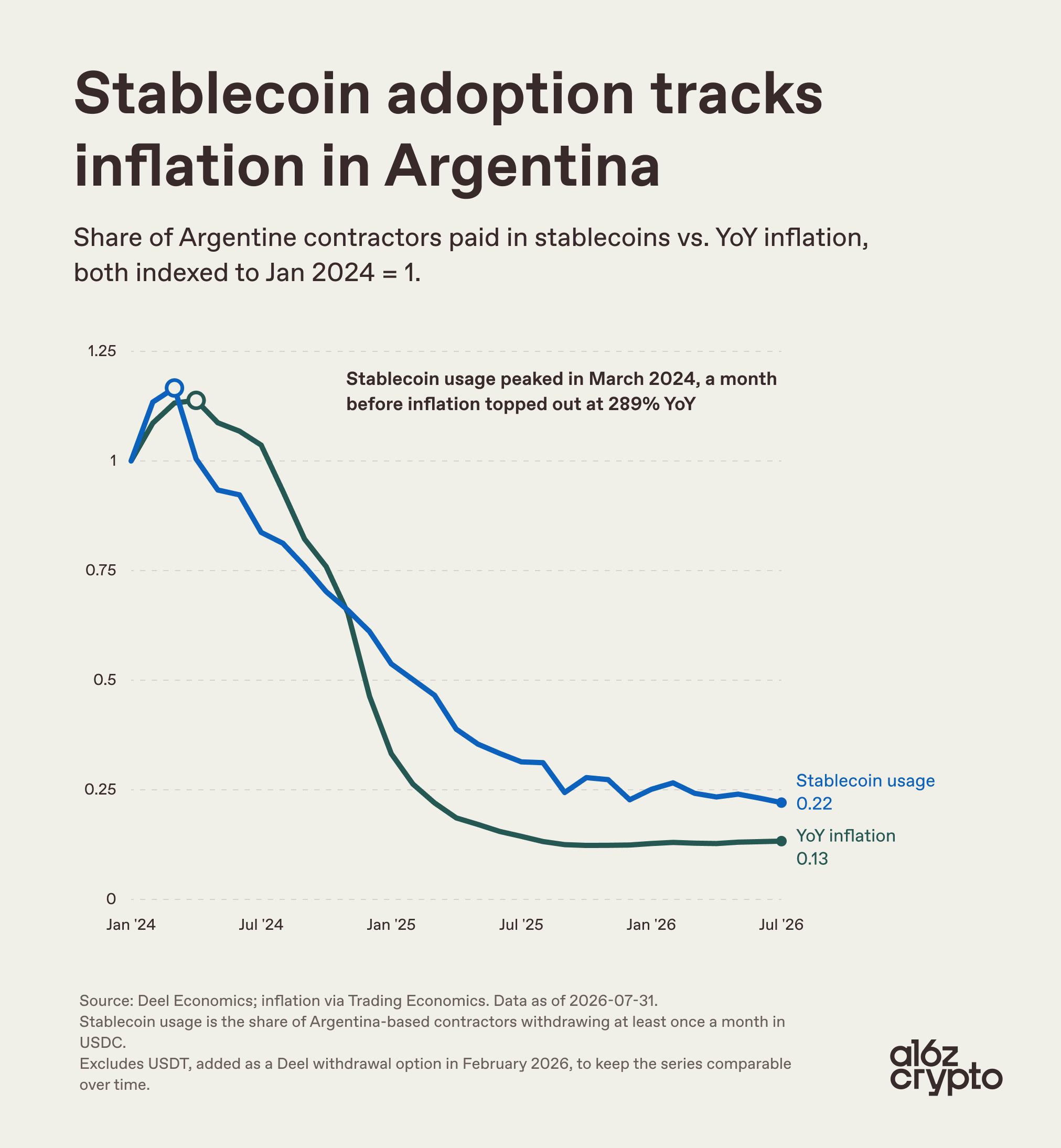
The above data comes from a16z portfolio company Deel, which helps run payroll in more than 160 countries. Using this data as an indicator, we can see both the share of Argentina-based contractors paid in USDC each month and year-over-year inflation.
Since the two metrics are indexed to January 2024, we’re seeing how each metric changed from that point, rather than the raw values. For a while, the two metrics appeared to move together. Then inflation eased, and stablecoin usage appeared to fall with it. As of July 2026, both were holding at about a fifth of their respective peaks.
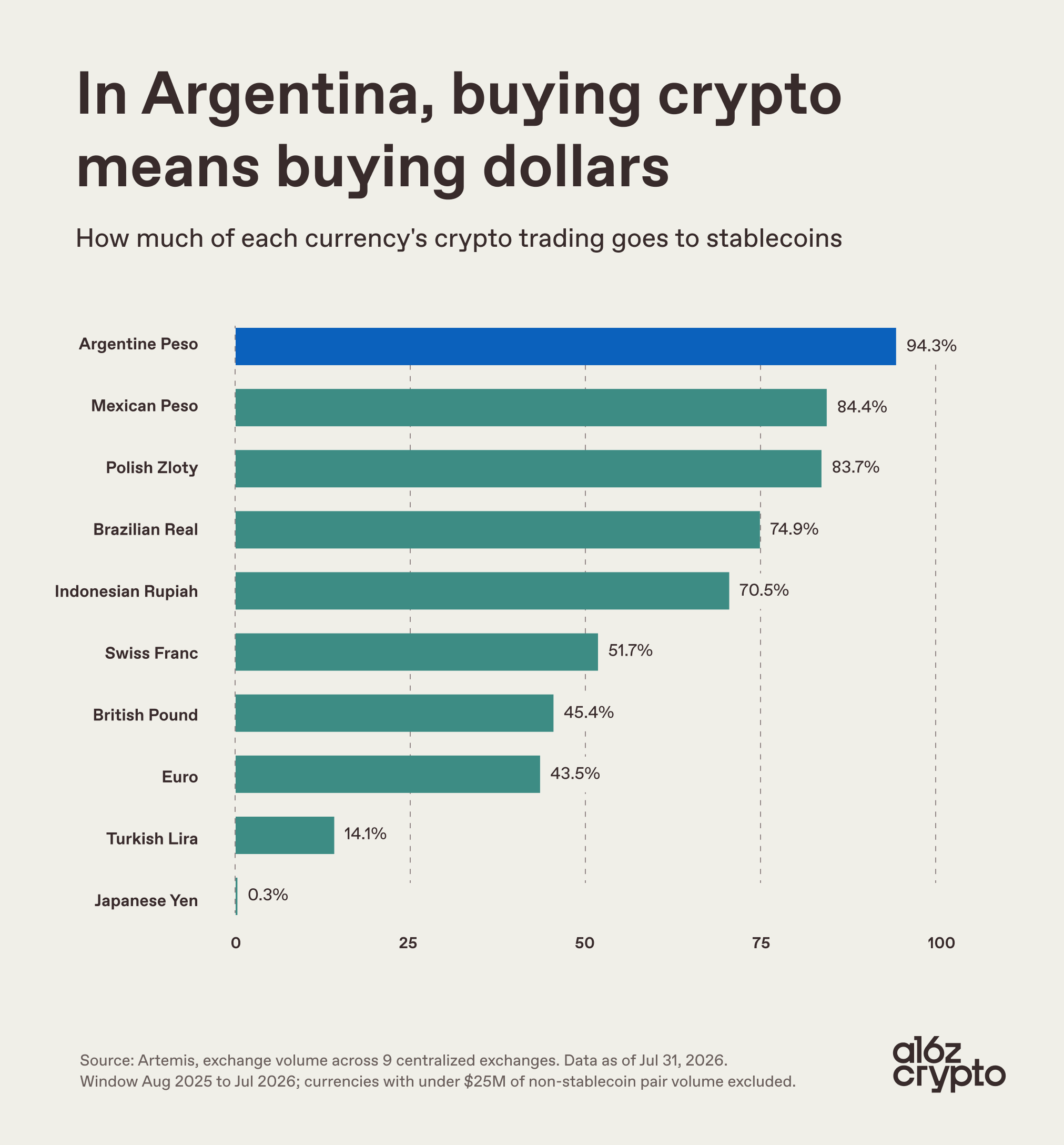
“Buying crypto” with pesos means “buying dollars” in Argentina. 94% of peso crypto trading goes to stablecoins — the highest stablecoin share of any major currency Artemis tracks.
What’s interesting is that for several years, the crypto dollar cost much more than a dollar bought at the official exchange rate.
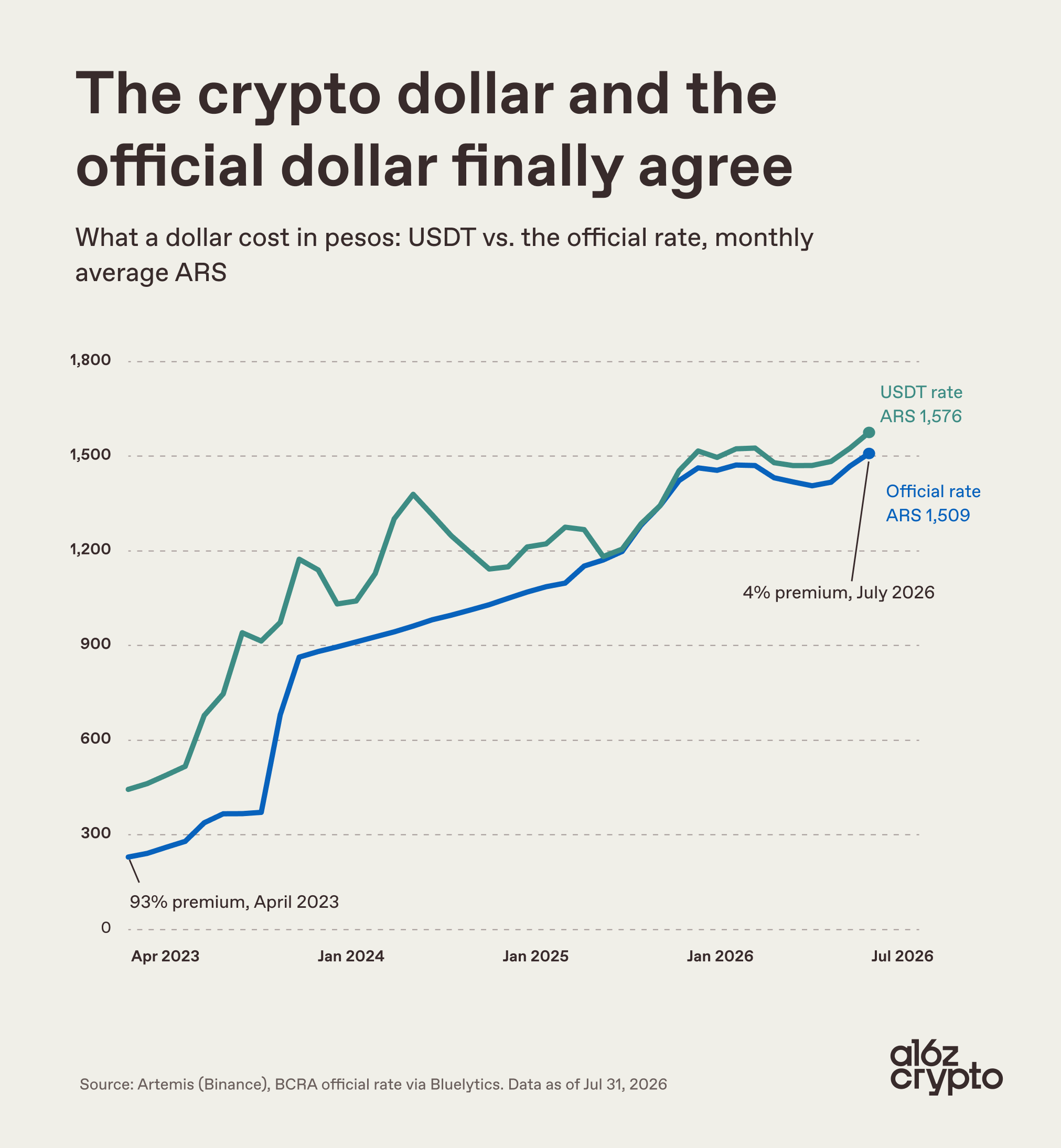
By 2023, the country’s capital controls made official dollars inaccessible to many Argentines and pushed the gap between the official and parallel exchange rates above 100%. Stablecoins became an alternative because they were available around the clock and weren’t affected by the controls. After Argentina lifted most restrictions on individuals buying dollars in April 2025, the rates largely converged.
As of August 28, 2026, a digital dollar costs about 4% more than one bought through the official market.
The economic crisis in Argentina seems to be cooling for now. Inflation is down, dollars are legal to buy, and the pressures that originally drove many Argentines to stablecoins have eased. You’d expect usage to fade with them. But it hasn’t.
Paycheck usage leveled off instead of disappearing. And downloads of Lemon, one of Argentina’s largest crypto wallets, climbed every quarter, even as monthly inflation fell from 25.5% to 2.1%.
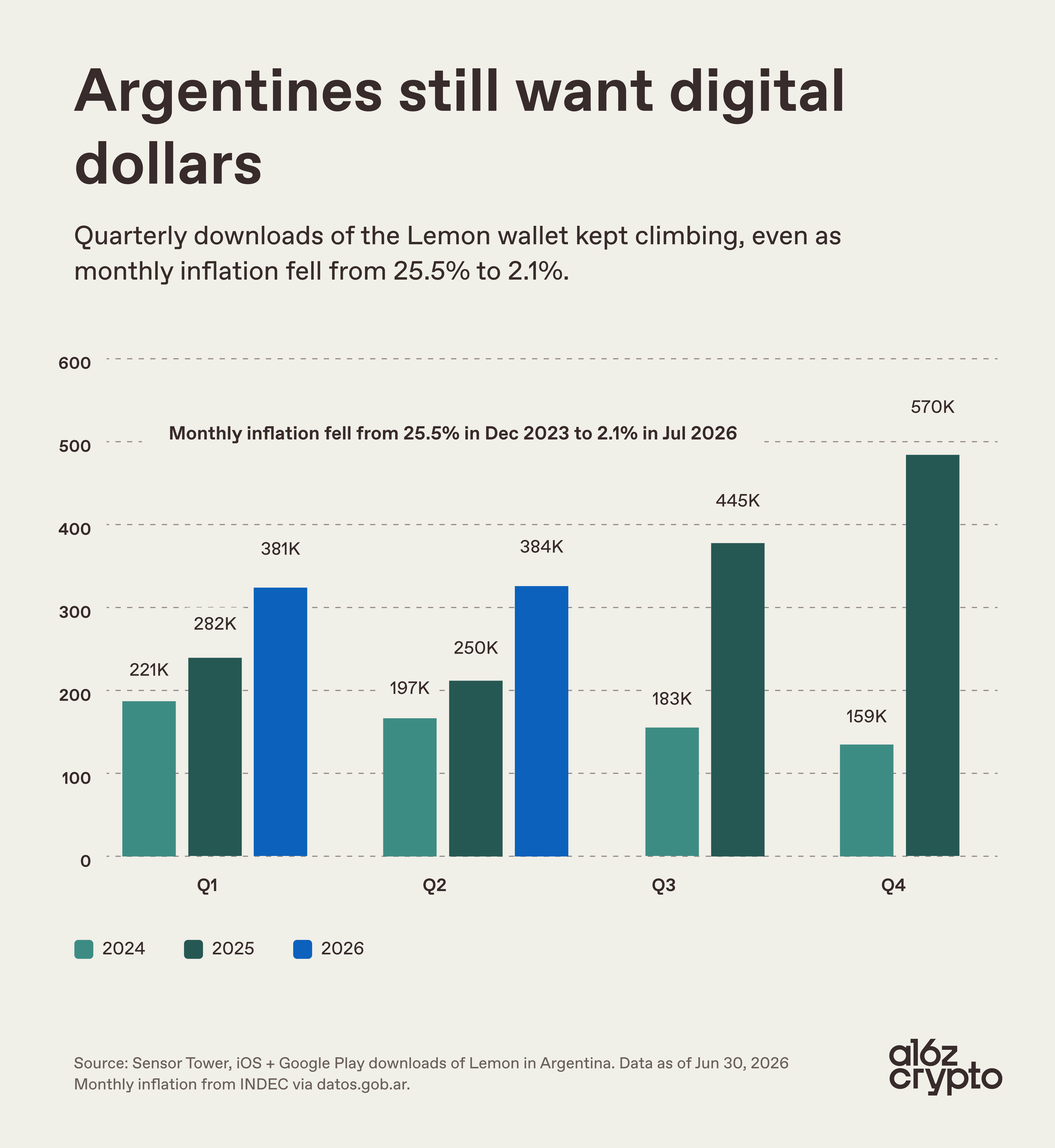
Stablecoins may no longer be just a hedge against inflation for Argentines — they could be becoming a habit.
Acknowledgments: Thanks to Ryan Holloway for data analysis and feedback.
Alejandro Flores is an editorial intern at a16z crypto.

Argentina is interesting because the stablecoin wasn't picked as crypto, it was picked as a dollar with a phone attached. Which suggests the habit survives even if the peso ever behaves, and that's the part people keep getting wrong.
Vamos!